1565(?)
Red Bay Shipwreck (San Juan?)
This Basque galleon may be the San Juan, which sank in 1565 at Red Bay, Labrador. The Basque operated a summer whaling station at Red Bay in the 16th century. The San Juan was loaded with 1000 barrels of whale oil, ready to sail back to the Basque country in northern Spain when it sank in Red Bay harbour. The shipwreck was discovered in 1978 by a team of underwater archaeologists from Parks Canada, based on research in Spanish archives by Selma Huxley Barkham. The Parks Canada team (led by Robert Grenier) excavated the entire ship and its cargo over the next decade. The sailing ship had 3 masts, 3 decks, was 22 metres long and could carry close to 250 tons of cargo.
Mid-1600’s
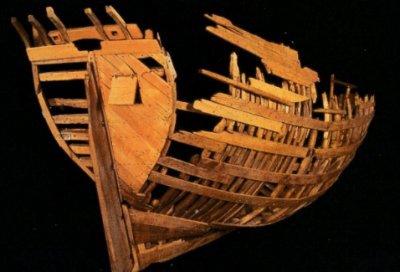
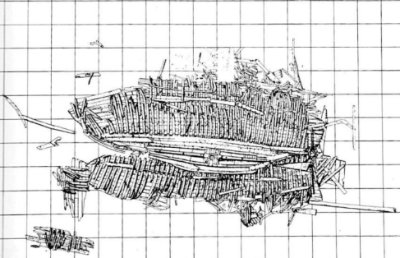
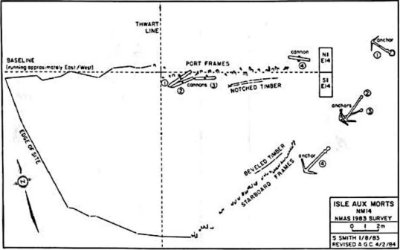
Isle aux Morts Shipwreck
This wreck of a 17th-century sailing ship is thought to be Basque. It is approximately 26 metres long and lies on the seabed 11 metres deep. The shipwreck was first discovered by 3 scuba divers from Port aux Basques in 1981. Wayne Mushrow recovered 2 marine astrolabes (navigational instruments dated 1617 and 1628), French coins (dated 1638), ceramic vessels and pewter tableware from this shipwreck. In 1983, the Newfoundland Marine Archaeology Society investigated this shipwreck and recovered 170 artifacts, including objects made of wood, leather, ceramic, metal and fiber. Artifacts from this shipwreck, including the 2 astrolabes, are on display in the provincial museum at The Rooms in St. John’s. The 2 astrolabes are on display at the Railway Heritage Museum in Channel-Port aux Basques every summer. SPSNL divers monitored this protected shipwreck site in 2024 and found it was undamaged by Hurricane Fiona (2022).
1696
HMS Saphire, Bay Bulls
The Royal Navy 5th-rate warship HMS Saphire escorted English fishing vessels to Newfoundland in the spring of 1696. On September 11, 1696 the Saphire was cornered and attacked in Bay Bulls harbour by a fleet of French privateers. Rather than let the Saphire fall into French hands, Captain Cleasby set fire to his ship and continued the battle ashore with his crew. Saphire burned and sank in the harbour. HMS Saphire was 32 m long, 8 metres wide, about 340 tons and carried 28 or 32 guns. In 1969, scuba diver Ernie Power discovered the shipwreck at a depth of 18 metres. Later in 1972, commercial salvage divers recovered and sold 3 iron cannons from the wreck. This prompted the formation of the Newfoundland Marine Archaeology Society (NMAS), to protect the shipwreck from further looting. The NMAS conducted mapping and limited excavations of the shipwreck in 1974 and recovered more than 300 artifacts. Underwater archaeologists from Parks Canada did more extensive excavations and mapping in 1977 and recovered approximately 3000 artifacts. The shipwreck was protected as a Provincial Historic Site in 1974. Shoreline development in Bay Bulls harbour over the years has prompted concerns for the integrity of the HMS Saphire wreck site. Divers from the NMAS monitored the wreck site in 1987. Similarly, SPSNL divers monitored the Saphire site in 2015. No damage to the shipwreck was observed in either case.


1781?
Trinity shipwreck (Speedwell?)
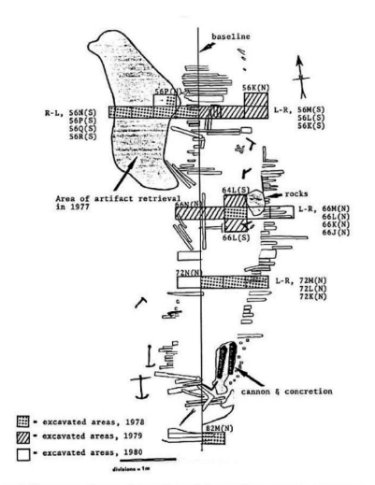
This shipwreck was discovered in Trinity harbour near Fort Point in 1977 by 3 scuba divers, who recovered numerous artifacts. The wreck is 12 metres deep. The Newfoundland Marine Archaeology Society (NMAS) investigated and mapped the site from 1977 to 1980 and recovered more than 1000 artifacts, including objects made of glass, leather, ceramics, metal, bone, wood, cloth and fiber. A copper seal was dated 1738 and a brass medal commemorated a battle in 1757. The sailing ship was made of white oak and the wreck was approximately 32 metres long. The cargo indicated the ship was a British merchant vessel. Historical research suggests the ship may have been the Speedwell (which sank in 1781) but this remains to be confirmed. SPSNL divers monitored the shipwreck in 2013 and found an anchor for a nearby floating dock in the middle of the wreck site. The anchor was removed shortly after.
1813
HMS Tweed, 1813
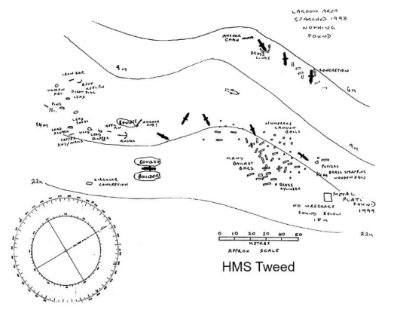
On October 5, 1813, HMS Tweed left Cork, Ireland as the Royal Navy escort for British merchant ships sailing to Newfoundland. Tweed was a sloop-of-war built at Littlehampton, England in 1807. She was 33 metres long, 9 metres wide, 431 gross tons and carried 18 guns. On November 5, 1813, the ship was wrecked on the rocky shoreline of Shoal Bay, Newfoundland in a storm and dense fog. Commander William Mather and half the crew survived. However, 67 crew were lost. Another sailing ship Southampton in the same convoy was also wrecked on the same day, just 2 kilometres to the south. The wreck site of HMS Tweed was located and mapped in the 1990s by scuba divers from the Royal Air Force at a depth between 6 and 18 metres.

1863
SS Anglo-Saxon
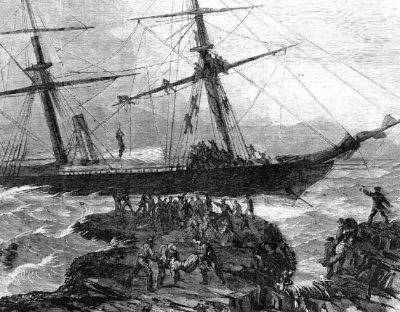
The Allan Line passenger steamship Anglo-Saxon was built in Dumbarton, Scotland in 1856. The vessel had an iron hull, three masts with sails and a single steam engine. It was 86 metres long, 11 metres wide and 1673 gross tons. It left Londonderry, Ireland with 445 (or 446) people bound for Quebec City. On April 27, 1863, the ship ran aground in dense fog near Clam Cove, about 7 kilometres north of Cape Race, Newfoundland. Some people on board escaped in lifeboats, others managed to get ashore on a boom or using a rope and basket. In all, 208 passengers and crew survived, while 237 (or 238) died when the ship broke up after less than an hour on the shore. It was the worst sea disaster in Newfoundland history, up to that date. The shipwreck has subsequently been torn apart by rough seas. The wreck site has experienced several salvage efforts over the years, including the first use of a diving bell in Newfoundland. Several groups of scuba divers have explored the shipwreck site. Objects from the wreck are scattered in rocky gullies down to about 17 metres deep.
1918
HMT Ascania
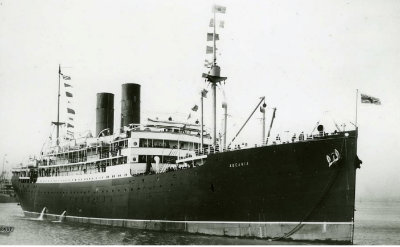
The Cunard ocean liner RMS Ascania was built in 1911 by Swan, Hunter and Richardson in Wallsend, England. It was 142 metres long, 17 metres wide and was 9121 gross registered tons. The liner was converted to a troopship in World War I and renamed HMT Ascania. The ship carried troops to Gallipoli, Alexandria, Marseilles and across the North Atlantic. On a voyage from Liverpool to Montreal, the ship ran aground just off Petites, Newfoundland on June 13, 1918. No lives were lost but the ship’s keel was broken and resulted in a total loss. The wreck lies in shallow water (10 metres deep) and is exposed to rough seas. Commercial salvage operations have done significant damage to the shipwreck. The wreck was broken apart with 2 boilers, 2 propeller shafts, 2 large steering quadrants and a densely-packed debris field when surveyed by SPSNL divers in 2013.
1942
SS Saganaga
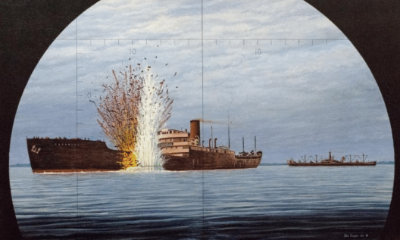
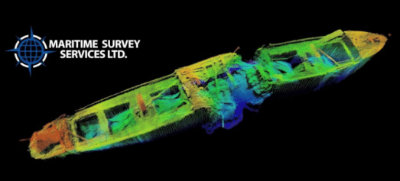
SS Saganaga was a 124-metre-long steel steamship built in Glasgow, Scotland in 1935. On September 5, 1942 it was fully loaded with iron ore from the Bell Island mine and floating at anchor just off Lance Cove, Bell Island, Newfoundland. At 11:45 (Newfoundland time), German submarine U-513 fired two stern torpedoes into the Saganaga, sinking her in just 3 minutes. Twenty-nine sailors died in the sinking and only 14 survived, including the Captain Angus MacKay. The survivors were picked up by a Newfoundland Customs boat out of Lance Cove. Five bodies were recovered from the sea; four are buried on Bell Island and one in St. John’s. SS Saganaga is now one of the most popular scuba diving sites in Newfoundland, lying on the seabed at a depth of 35 metres.
2002
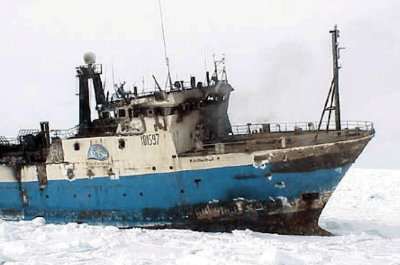
MV Katsheshuk
MV Katsheshuk was built in Drammen, Norway in 1987 as a stern trawler named Ice King. In 1988, the ship was sold, moved to Nova Scotia and renamed Atlantic Enterprise. In 2001, the ship was sold again, moved to Newfoundland and renamed Katsheshuk. The shrimp factory freezer trawler was 67 metres long, 14.5 metres wide and was 2674 gross tons. On March 17, 2002, fire broke out on the vessel while it was stopped in ice off the coast of southern Labrador. The crew were forced to abandon ship after unsuccessful attempts to fight the fire. Several days later, Katsheshuk was taken under tow by the tug Atlantic Maple, heading to St. John’s. On March 30, 2002, Katsheshuk sank 11 kilometres north-northwest of Cape St. Francis, Newfoundland. The wreck lies on the seabed at a depth of approximately 150 metres.