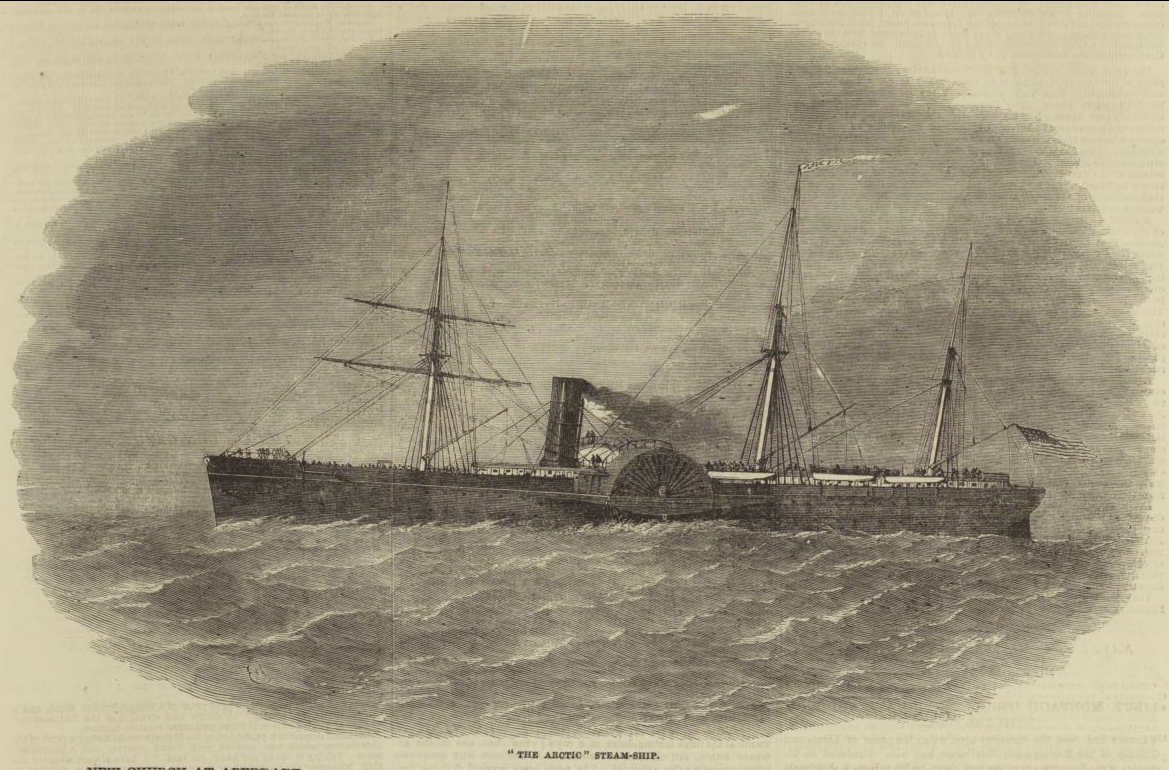
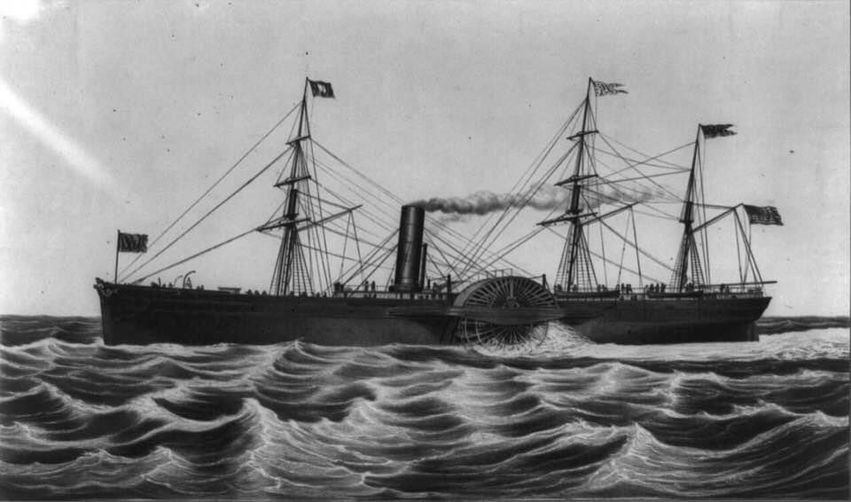
On September 20, 1854, the 284-foot wooden American paddle steamship Arctic departed Liverpool on her return voyage to New York, carrying approximately 350 passengers. Built in 1850, she was one of four vessels—along with the Atlantic, Pacific, and Baltic—commissioned for the Collins Line. Designed for both speed and luxury, the ships were renowned for their comfortable Atlantic crossings. In 1852, the Arctic had even set a record, steaming from New York to Liverpool in just nine days and seventeen hours.
A week into the voyage, on the morning of September 27, the Arctic entered the dense fog of the Grand Banks. Shortly after noon, the French steamship Vesta suddenly emerged from the fog directly in her path. The smaller vessel struck the Arctic at the bow, tearing a fatal hole in her wooden hull.
Although the collision was catastrophic for the Arctic, the Vesta survived. Her steel hull and watertight internal compartments allowed her to remain afloat despite the damage. The same could not be said for the Arctic, as seawater rapidly poured into her hull.
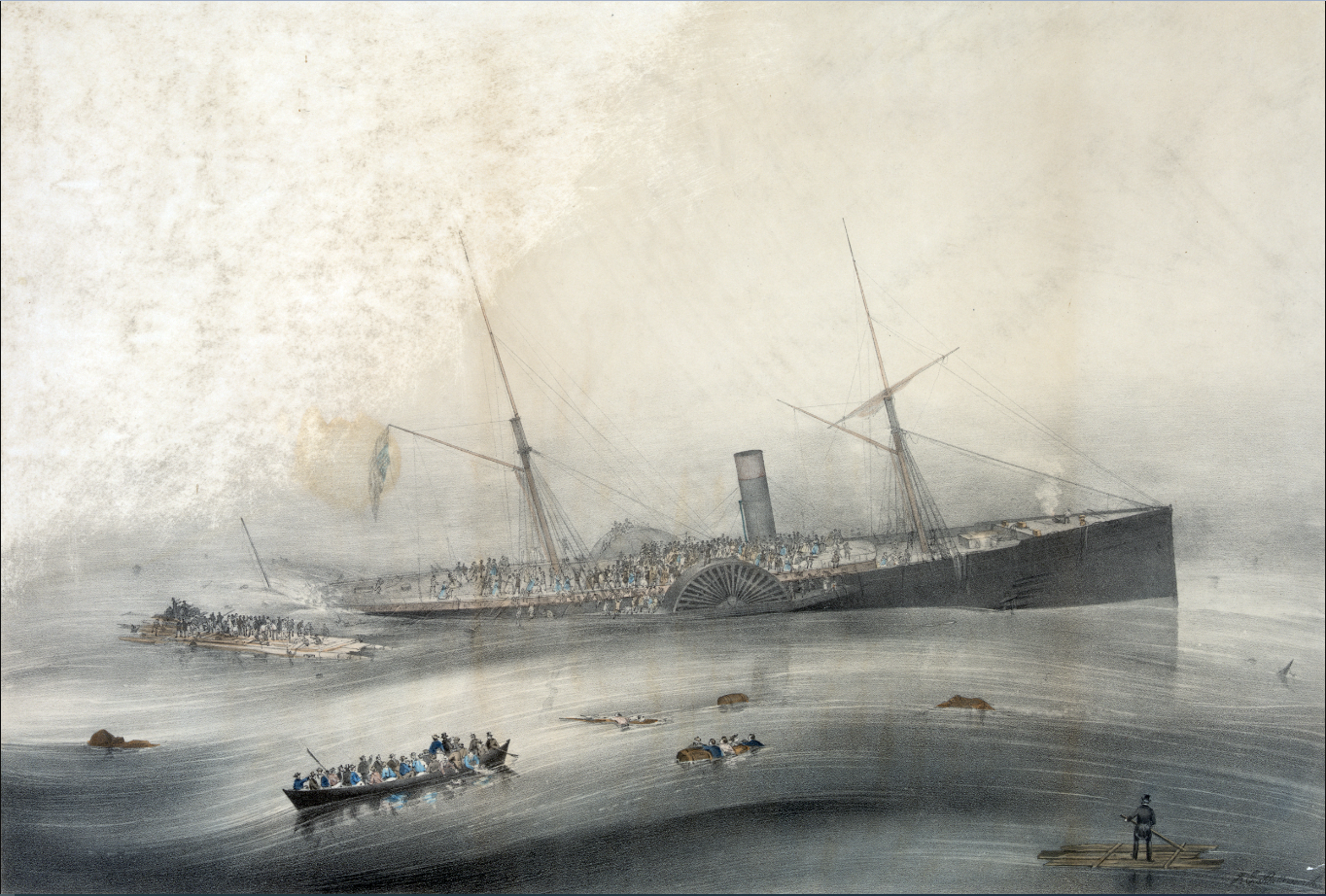
As the paddle steamship began to sink into the icy North Atlantic, panic spread among the crew and passengers. The crew failed to organize an effective evacuation, and many passengers were unable to reach the lifeboats and were left struggling in the frigid water, clinging desperately to the wreckage.
With more than 400 people aboard, only about 85 survived—approximately 24 passengers and 61 crew members. The disaster became one of the most tragic and controversial maritime losses of the nineteenth century, remembered not only for the destruction of a celebrated luxury liner, but also for the catastrophic failure to properly evacuate those aboard.